Most Popular Social Media Platforms in the UK: User Reach and Engagement in 2026

Social media use in the United Kingdom keeps shifting, with platforms competing for attention, engagement and loyalty. In 2026, a handful of major players stand out for user reach and engagement, each playing a different role in the daily digital lives of UK residents.
Our research explores which platforms are leading the market, what audiences they are capturing, and how engagement rates vary across platforms.
Social media usage is increasingly integral to daily routines, influencing communication, entertainment, and even the way people consume news.
We use this data to shape the social media management strategies we build for each of our clients.
Leading Platforms by Reach
WhatsApp is still the platform UK internet users name as their favourite, according to DataReportal’s Digital 2026: The United Kingdom report, with around four in five using the app every month. Group chats, voice notes and business messaging keep it woven into daily life for users aged 16 to 64.
WhatsApp’s encryption and reliability also make it a go-to for personal and professional conversations alike. Facebook still holds a huge base too: 38.8 million UK users at the end of 2025, or roughly 70% of adults. Despite competition from newer platforms, it has remained a constant, helped by its ties to Instagram and Messenger, a family of apps that keeps users inside the Meta ecosystem.

Instagram and YouTube are close behind. Instagram reached 35.5 million UK users at the end of 2025, around 63% of adults, while YouTube reaches 55.5 million people, more than 80% of internet users. Instagram’s popularity is largely driven by its visual content, social influence, and ability to stay relevant through continuous updates like Reels and Stories. This has made it a favourite for younger users, influencers, and brands who want to leverage the platform’s focus on visual storytelling and community engagement. YouTube, on the other hand, remains a go-to platform for video content, ranging from tutorials to entertainment. YouTube’s broad audience base makes it attractive to advertisers seeking a wide mix of viewers. Its wide variety of content—from music videos and vlogs to educational content—means it appeals to users of all ages and interests, ensuring a steady stream of engagement.
Engagement Rates Across Platforms
While reach indicates the number of people who use a platform, engagement metrics reveal how actively these users are involved. TikTok, despite not topping the list in terms of overall reach, has achieved the highest engagement rates in the UK. UK users spend an average of roughly 49 hours a month on TikTok, far more than on any other platform, and Ofcom’s latest Online Nation report has 18 to 34 year olds averaging about 49 minutes a day on the app. So you might want to read our article about how to go viral on TikTok.
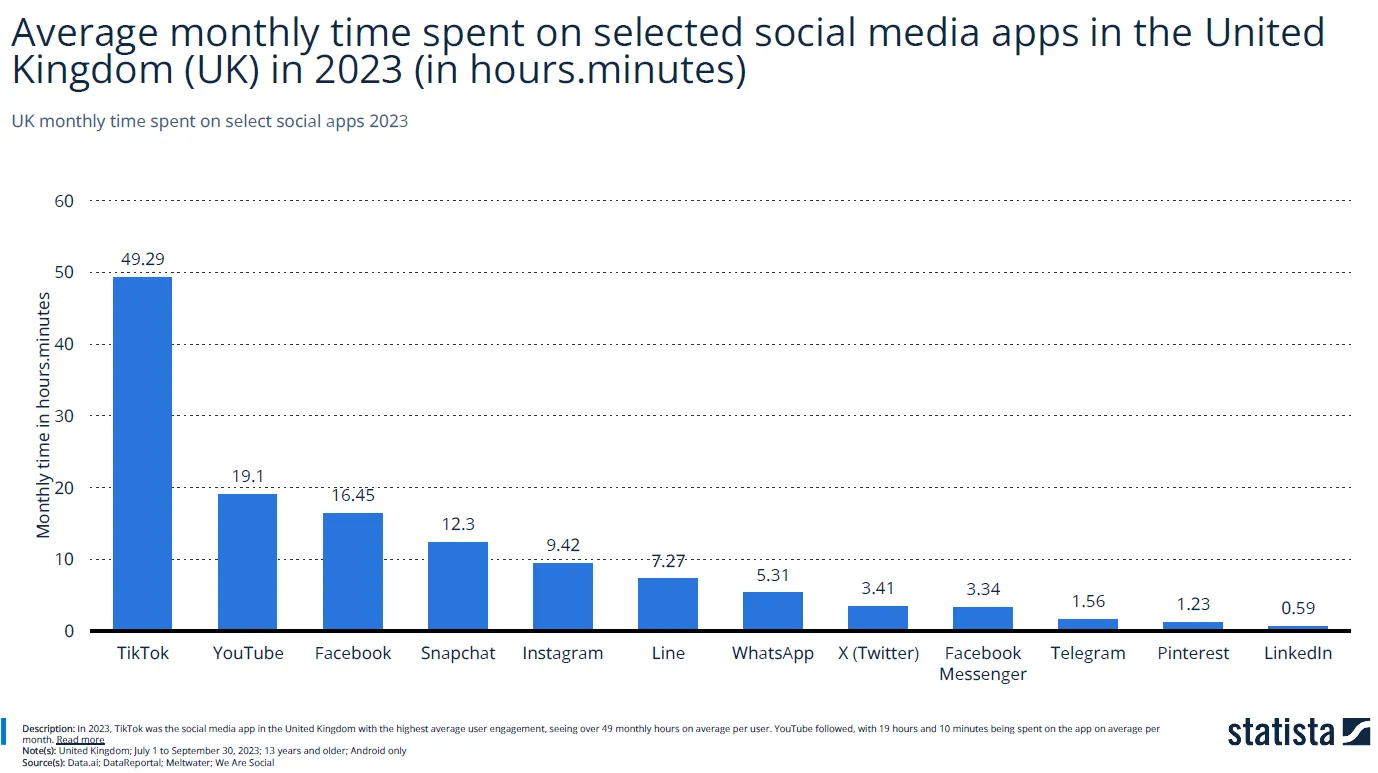
The platform’s short, engaging videos keep users scrolling and interacting for extended periods, especially among the Gen Z demographic. TikTok’s algorithm, which tailors content to individual preferences, creates a highly personalized user experience, driving prolonged sessions and repeated usage.
Facebook also has high engagement, but the time users spend on the platform has been gradually decreasing compared to previous years. Facebook users spend about 43 minutes a day on the platform, which keeps it second to TikTok for time spent. However, while the engagement rate has decreased, Facebook remains a primary platform for connecting with friends and family and serves as a hub for community groups and local events. Its diverse range of features, from Marketplace to Groups, helps maintain user interest even if overall engagement time is lower.
Instagram and Snapchat are other notable contenders for engagement. Instagram maintains high daily usage among younger audiences, with users spending an average of 30 minutes per day on the app. The app’s integration of shopping features has also transformed it into a platform for both social interaction and e-commerce, making it popular with brands and consumers alike. Snapchat, popular primarily among teens and young adults, sees strong engagement, driven by features like Snap Maps, Stories, and direct messaging, which cater to the need for visual and spontaneous communication. The ephemeral nature of Snapchat’s content encourages frequent check-ins, contributing to its strong engagement among younger users.
Generational Preferences and Usage Trends
Different generations favor different platforms, with younger audiences flocking to TikTok, Snapchat, and Instagram, while older demographics tend to use Facebook more. Generation Z is particularly attached to TikTok, spending considerable amounts of time on the platform for entertainment, following trends, and connecting with creators.

The immersive video experience offered by TikTok has proven to be a unique value proposition for the younger demographic, who appreciate the platform’s creativity and rapid trend cycles. TikTok’s influence on popular culture is notable, with many viral challenges, memes, and music trends originating on the platform.
Millennials, on the other hand, tend to diversify their social media use. Many remain loyal to Facebook for staying in touch with family, while turning to Instagram for visual content and LinkedIn for professional networking. LinkedIn’s user base, while smaller in comparison, has shown steady growth, particularly among professionals aged 25-34. It is clear that the generational divide plays a significant role in shaping platform popularity and engagement. Baby Boomers, while less active on newer platforms like TikTok, still maintain a strong presence on Facebook, which serves as a familiar space for staying connected and informed.
Generation X shows varied preferences, with many using Facebook for family and community-related activities, while also exploring Instagram and LinkedIn for both personal and professional purposes. LinkedIn has become an important tool for networking, job hunting, and establishing professional credibility, making it especially relevant for Generation X and Millennials. The varied use of social media by different generations highlights the importance of a targeted approach for brands and marketers aiming to engage specific audience segments.
The Role of Social Media for News and Information
Social media platforms are not just about social interactions but also serve as a primary source for news and information for many users in the UK. Facebook remains the most popular social platform for news in the UK, according to the Reuters Institute’s Digital News Report. The platform’s News Feed algorithm, which shows content based on user behavior, means that news stories can reach wide audiences quickly. However, this also raises concerns about echo chambers and misinformation. Twitter (now rebranded as X) and YouTube also serve as prominent news gateways, especially among users looking for varied perspectives and video news content.

Twitter’s real-time nature makes it particularly popular for breaking news, while YouTube’s visual format allows for in-depth analysis and diverse viewpoints.
This dynamic reflects the role of social media in influencing public opinion and the increasing reliance on these platforms for current events. Social media has democratized access to information, allowing users to consume news from multiple sources and viewpoints. However, the role of algorithms in curating content also means that users are often shown information that aligns with their existing beliefs, which can contribute to polarization. Despite these challenges, the convenience and immediacy of social media make it a preferred source of news for many, especially younger users who value accessibility and variety.
Final thoughts
Social media in the United Kingdom in 2026 reflects a broad mix of preferences and behaviours. WhatsApp and Facebook lead in terms of user reach, while TikTok takes the crown for engagement. Instagram, YouTube, and Snapchat also maintain significant presence and loyalty among different age groups. Understanding these dynamics is essential for brands, marketers, and content creators aiming to reach audiences and get results from social media in the UK. The differences in platform use by age group, as well as the varying levels of engagement, highlight the importance of a nuanced approach when developing social media strategies.
As the digital world evolves, it will be intriguing to see how these platforms adapt to shifting trends, regulatory changes, and technological advances, ensuring they meet the needs of users and continue to capture their engagement. Emerging technologies such as augmented reality (AR), virtual reality (VR), and artificial intelligence (AI) are likely to shape the future of social media, offering new ways for users to interact and for brands to connect with their audiences. Platforms that can innovate while maintaining user trust and safety will likely remain dominant in this competitive landscape, ensuring they continue to play an integral role in the lives of UK residents.